Identify a real issue
Start from a field situation, recurring question or customer pain point.
Case study 03 · Content strategy
Designing and leading a B2B content strategy built around customer pain points, real-world situations and product use cases — making complex subjects accessible rather than simply listing features.
Starting point
EZad had brochures, flyers, a website and occasional Facebook posts, but no real editorial strategy connecting the company's expertise, customer challenges and product use cases.
The objective was to build a more consistent content approach: strengthen awareness, demonstrate expertise, drive traffic to the website and speak to B2B decision-makers through situations they recognise.
Editorial approach
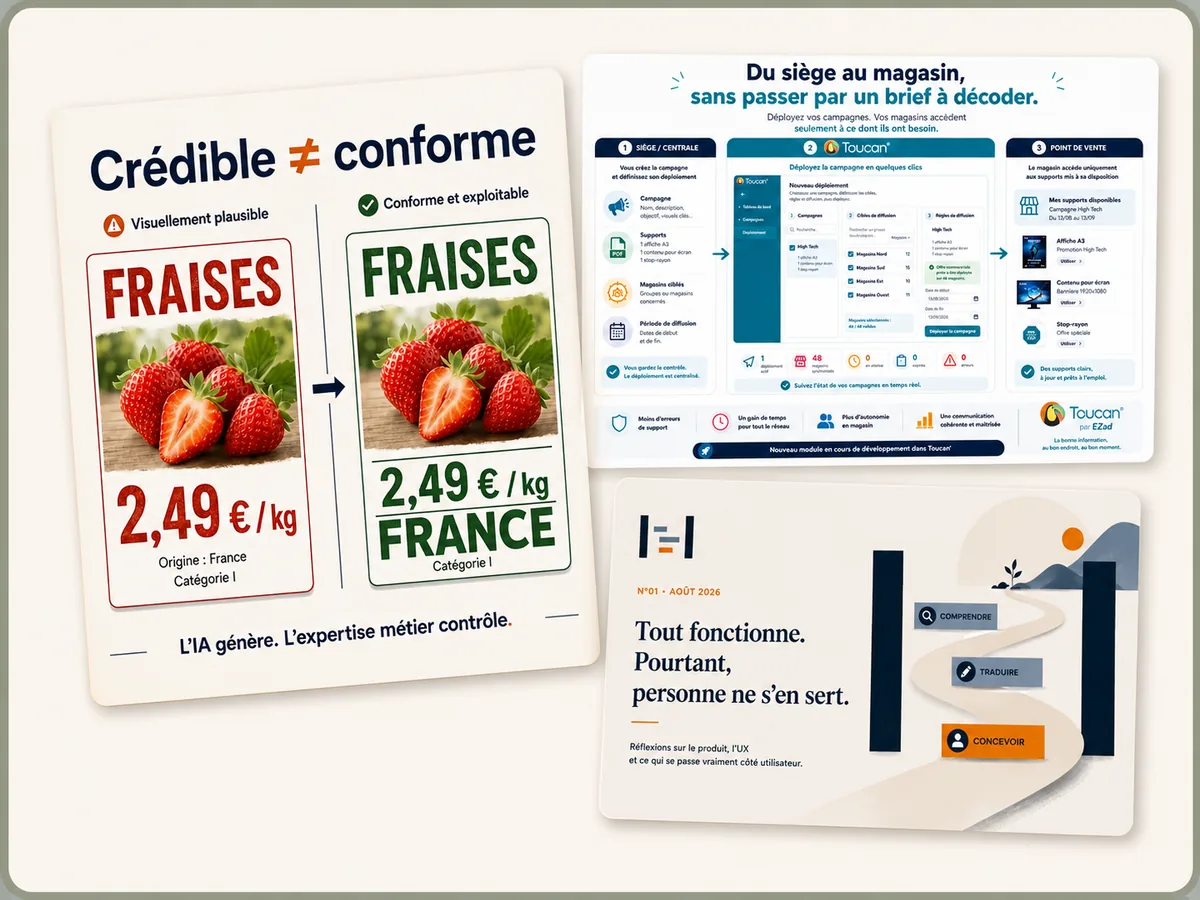
Instead of presenting Toucan® through a succession of functions, I increasingly structure content around concrete situations: a display error, a pricing update, a store-specific exception, a national campaign that needs local adaptation, or a user workaround that reveals a real need.
This makes it possible to talk about the product without making every post feel like a sales pitch. The software becomes the answer to a situation the audience can already understand.
Start from a field situation, recurring question or customer pain point.
Choose what needs to be understood before deciding on the format.
LinkedIn post, article, newsletter, visual or video depending on the subject and audience.
Track impressions, clicks and engagement to refine future content choices.
Case 01 · Personal LinkedIn
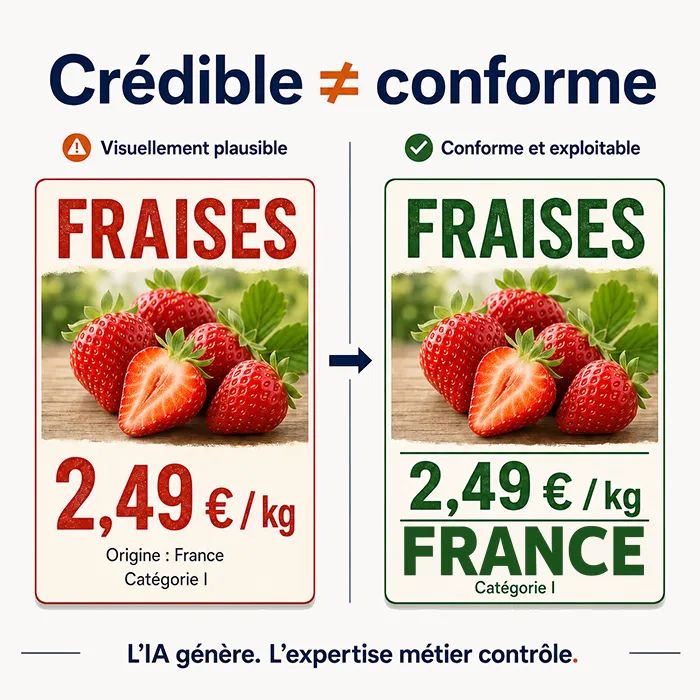
One of the strongest-performing posts on my personal profile started from a very practical topic: mandatory origin information and the difference between a display that looks credible and one that is actually compliant.
The post worked because it began with a real business constraint rather than software. Toucan only entered the story as part of the wider question of how retailers secure their in-store communication.
Performance
5,055 impressionsPublished from a profile with roughly 250 followers at the time: around twenty times the direct audience size in impressions.
Source: LinkedIn analytics export.
Case 02 · Company LinkedIn
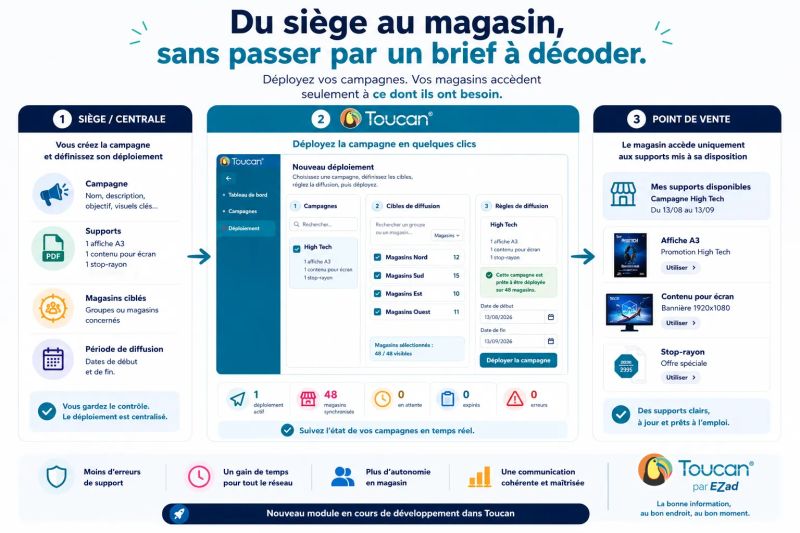
This post addressed a common problem in retail networks: information prepared centrally can be perfectly valid from a marketing perspective while still being too dense, too abstract or poorly adapted to the point of sale.
The content reframed the subject around the gap between what headquarters wants to communicate and what a customer needs to understand in store.
Case 03 · LinkedIn to blog
Social media is also used to bring readers toward longer-form content. For an article on how AI is changing merchandising, the LinkedIn post was designed as a teaser: enough substance to create interest, while keeping the more detailed analysis on the website.
A small audience, but a useful example of a post whose role was to generate qualified traffic rather than reach alone.
Long-form content
The editorial strategy also includes longer formats designed to support the company's SEO, explain more complex topics and create content that can continue to attract visitors over time.
This editorial approach also shaped the content and user experience redesign of the EZad website.
Newsletter
I launched the LinkedIn newsletter Entre le besoin et l’usage to explore a recurring theme in my work: the gap between what is requested, what is designed and what people actually use.
The first issue, “Tout fonctionne. Pourtant, personne ne s’en sert.”, focused on a familiar product question: a feature can be technically successful and still fail if it does not fit naturally into users' habits or workflows.

From message to production
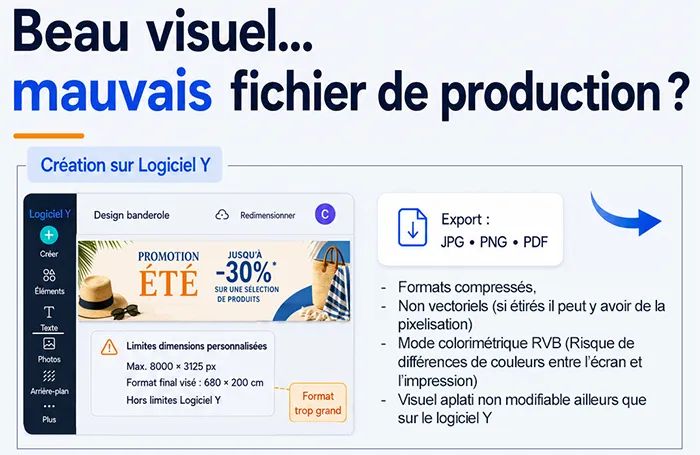
Depending on the subject, I create the visual or video format myself. The goal is not to decorate the message but to make the core idea understandable at a glance.
This work draws on in-depth product knowledge, developed in particular through the redesign of the Toucan® product identity and interface.
The message in motion
Depending on the topic and the channel, the same clarification work can take an animated form. I use video to establish a problem quickly, show the response and communicate a benefit without running through a list of features.
Channels
Rather than multiplying platforms, I focused the company's regular activity on LinkedIn and Facebook, with the website and blog acting as the long-form content base.
This makes the workload manageable while allowing each channel to serve a clearer role: professional visibility and expertise on LinkedIn, more practical product-focused content on Facebook, and evergreen in-depth content on the website.
What this project demonstrates
This work brings together editorial strategy, business understanding, product knowledge, visual production and performance analysis.